About Meridians
Giving a precise and conclusive explanation of how meridians function, if at all possible, will require a long trip around the entire corpus of Chinese Medicine literature. However, in the context of the work we do on the massage table, we can take an approach that is perhaps simplistic, yet intuitive, one that can be experienced rather than learned.
Chinese medicine recognizes specific functionalities in our body, and loosely attributes them to organs such as the lung, the heart, the stomach etc. However, unlike our western concept of these functions, their Chinese counterparts also maintain specific mental capabilities: the lungs, for instance, deal with our capacity to put borders between us and our environment, the spleen, which is responsible for digestion, is also responsible for data processing etc.
One can say that these functions (breathing, digesting, regulating etc.) maintain their own intelligences that are a part of our identity, but still maintain their own identity and independence yet they tightly interact with each other.
In order for these functionalities to respond to our everyday life situations, these entities require the capacity to sense and connect both to the outer world and to each other.
This concept is not that alien to Western medicine: we talk about hormones and nerves providing feedback and control to the different systems in our body.
The key to good health, according to the Chinese way of thinking is to make sure by proper communication between these organs a balance that will allow the organs to function at their best and to support each other wherever necessary.
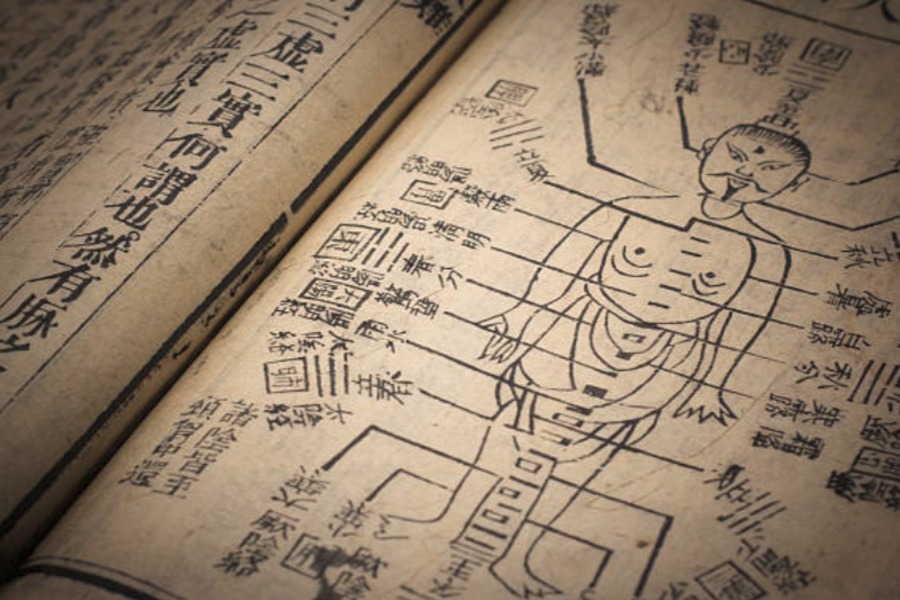
To do so, according to Chinese medicine, these systems maintain channels, or meridians as we frequently call them, that are kind of antennae for our inner organs. Though some of these routes are internal, and therefore not accessible to us, there are also sensitive areas on the skin of our body that communicate with our internal organs.
By stimulating these antennae (needling, pressure, heat or simply by exercising them) we can communicate with our internal organs and affect the way they function.
To do so, in Pause and Move we offer our clients a variety of modalities, each approaching the task slightly differently: Shiatsu and Tuina are manual therapy techniques designed for that purpose, Qigong and Connected Movement open communication channels through movement. Sometimes even simple conversation is enough to open these routes.
This correlation between the surface of our body and the inner functionality of the body is a two way stream: we can learn about the condition of our internal organs by observing the surface of our body, and we can affect the internal organs by stimulating these areas.
Using the modalities we practice in Pause and Move, we learn to listen to these meridians as well as to stimulate them in order to improve their function as a channel to transfer information to and from our internal organs and emotions to our limbs and surface area.
Subscribe to our newsletter
Get gentle reflections, wellness insights, and breathing practices straight to your inbox.